
Seven ways you can make your marketing more inclusive

The building blocks of an inclusive marketing strategy (Credit: Unsplash)
Show your customers you see them without any box-ticking in sight.
It’s no secret that diversity, equality, and inclusion (DEI) has become something of a hot potato in the worlds of politics and business in the past year or so. And as with any hot potato, it’s only natural that people are worried they’ll get burned by inclusive marketing. But worry is not a good enough excuse to neglect inclusive marketing.
The fickle art of advertising and marketing
When I started my master’s degree as a relative industry newbie, I truly believed I was going to work for some of the world's biggest corporations, spreading my message of inclusion, tolerance, and acceptance. Now I’ve graduated completed my research project on disability-inclusive advertising, I realise that I might as well have been chasing rainbows and unicorns! Because advertising and marketing is trend-based and sometimes even a little bit fickle.
Take a look at this billboard ad (known as out-of-home or OOH advertising in industry lingo) for Tesco Mobile released in 2022. It’s a campaign that stuck in my memory because it was quirky and fun. But it’s dated.
Yes, 2022 may only feel like mere months ago but look at the elements of the ad. For starters, the way we search for information has changed a lot. I’m willing to bet that a telecoms brand would be more likely to focus on unlimited social media or AI chatbot usage in the EU rather than unlimited web searches. Plus, if you want concrete proof it’s dated, check out the top corner. It says 4G not 5G…
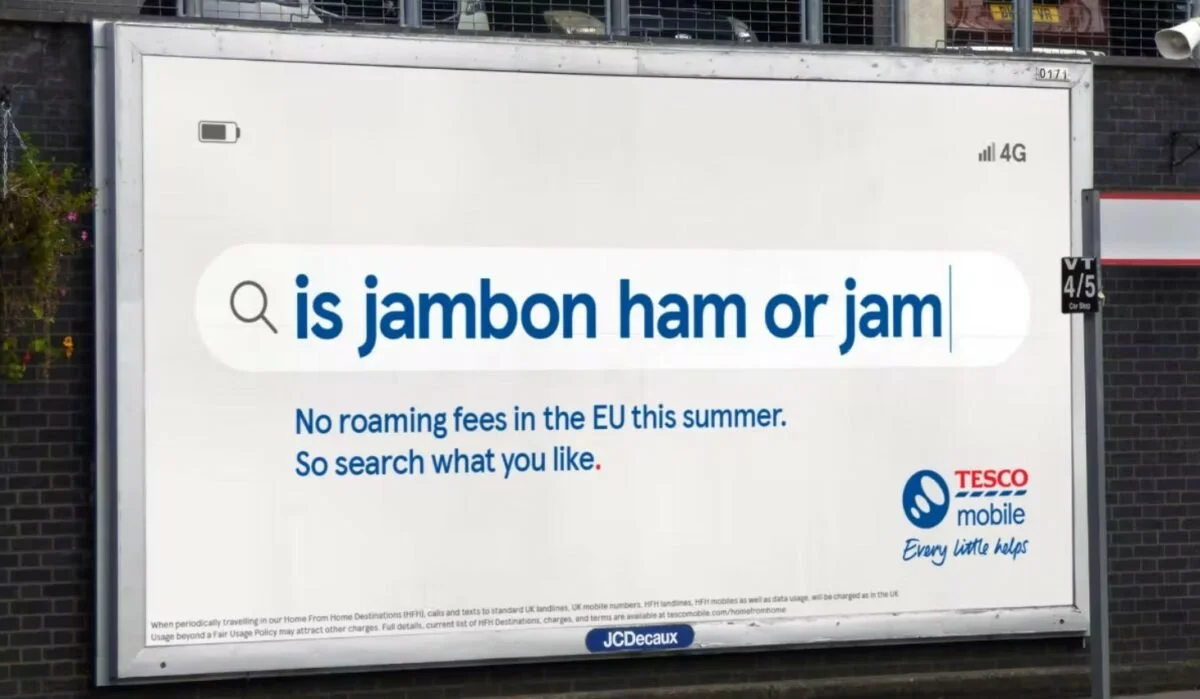
Tesco Mobile EU roaming fees billboard from 2022 (Credit: Marketing Beat)
Inclusion + marketing = inclusive marketing?
OK, so enough of the fluff! What do the seemingly random observations I made above have to do with inclusive marketing? In short, they highlight the challenges facing businesses and brands when they’re trying to integrate inclusion into marketing. Each concept moves at a drastically different pace.
Where marketing is trend-based, inclusion is more policy-based, open to debate and different viewpoints. You just need to scroll through your social media feed to find various different views about what inclusion means. To say it’s a flashpoint is underselling it.
This might make you feel a little more cautious about splashing the big bucks on inclusive marketing, and understandably so. What if your campaign suddenly alienates part of your audience who change their mind about the merits of inclusion overnight?
BUT…
Inclusive marketing doesn’t have to be about the big bucks. It’s fundamentally about saying to your customers “we see you and we’re here for you”. Having a prescribed number of models representing minority groups in your campaigns comes across as a bit cold and clinical (to be quite frankly honest, as a marketer who uses a wheelchair, I make a point of hiding ads from my social media feeds when I feel like brands have used disability as a token gesture or box-ticking exercise). Instead, inclusive marketing is about putting a mirror up to your customers and reflecting what they really want to see.
Here are seven quick ways to make your marketing more inclusive at no extra cost…
Talk to your customers
I know it seems really obvious but one of the best ways to get to know your customers is to talk to them. I’m not suggesting for a second that you should sit down and with them in a formal interview setting but slipping the odd question into conversation like “how did you find out about us?” can be really valuable, particularly for small businesses and SMEs. Yes, it might not help you go away and create a campaign that fully reflects your customers but it gives you an idea of which channels are resonating with which customers. Marketing is about messaging, and a customer won’t discover you through a channel if your message doesn't resonate with them – they’ll just scroll on by.
Run a survey
If you’re in the e-commerce space or if your business isn’t particularly customer-facing, it can be tricky to find the opportunity to have those conversations. But that doesn't mean you can’t! Use a free tool like SurveyMonkey to put together a list of questions that would help you understand who your customers are and send it out to your mailing list. The response rate won’t be 100% but even one response gives you more insight than you had before.
Ask for user-generated content (UGC)
One of my favourite inclusive marketing hacks is to ask for UGC. Ask users to post their purchases, thoughts, and reviews on social media and tag your business or brand. This instantly gives you a rich source of data about who you should be talking to. Make sure you interact with and comment on their post to show your appreciation but also monitor the signs. What are the characteristics of the most successful UGC posts? Who’s interacting with them? With a little bit of work, it can really help you build a picture of who wants to be included by your brand.
Listen to the comments section
I know this one can feel like the wild west at times but if you have the willpower to cut through the noise and turn criticism into something constructive, it can really pay dividends. If you’re selling clothes for example and you see lots of comments saying “I wish you had a range that incorporated stoma bags”, it’s a good indicator that a portion of your intended audience feel excluded. Once you know who feels excluded, it’s easier to include them.
Remember you don’t cater for everyone
There’s still a school of thought in the world of business and marketing that the broader your audience, the better. In theory, you’ll make more money but in practice nobody will feel seen by your brand or business. It’s as though you’re marketing in 2D not 3D. By understanding who your brand is most popular with and developing your niche, you quickly begin to understand the nuances within your audience.
For example (and I make no apologies for using my lived experience here), if I was to be a regular customer in your shop but you adopted an “everyone” ethos, you might include a wheelchair user in a single campaign and let us drift off into the ether again after you’ve ticked your box. If you take a “niche” approach, you might consider why I come into your shop and how you could use it in your marketing. Maybe I use your shop because it has ramped access and wide aisles. If I do, then you could think about marketing the shop as accessible, highlighting how you cater for those with mobility issues and maybe even people with buggies and prams. This way, you’re telling me and other wheelchair users that you understand them without putting the spotlight solely on them and taking the opportunity to expand your audience even further by making them feel seen too. It’s a win-win really!
Make inclusive marketing your ethos, not a one off
Inclusive marketing only works if you’re consistent. One-off campaigns that showcase a section of your audience can be nice, but nice achieves nothing. What I mean by that is that if you make someone feel seen, you need to keep them in your sights.
Take the example above. If I’m just allowed to disappear into the ether as a wheelchair user, I’m going to feel betrayed. Even if that sounds a tad melodramatic, it’s still true. Rather than truly seeing me, you saw an opportunity to make a token gesture that made you feel good.
On the flip side, if you commit to understanding me and looking beyond what you can see, I actually feel seen and so will others. If you adopt an inclusive ethos, there’s every chance your customer loyalty will improve, and you’ll begin to find that customers are recommending you to other people that can also identify with what they see.
Don’t promise what you can’t deliver
This seems the most obvious point, but in my experience, it can be the most overlooked. If you want to include someone with a mobility impairment in your marketing, what steps have you taken to ensure they can access your business. If your business is up a flight of stairs and you’re not able or willing to install a lift, then your inclusive marketing misses the point spectacularly.
I have an incredibly vivid memory of visiting a well-known educational institution (which shall remain nameless) when I was looking for somewhere to study. I’d been so excited because the prospectus had featured an image of someone in a wheelchair. What it didn’t show was that the picture was taken at the bottom of a steep cobbled hill and that some of the ramps were still a work in progress…
I came away feeling let down, cheesed off, and complaining all the way home (which was hours!) But had it been as advertised, I would have felt seen and that institution would have found its way very easily to the top of my list of choices.
I’m not saying you need to follow these steps as rules and I’m definitely not promising you’ll become Insta-famous (I’d be a terrible marketer if I gave you false guarantees!) But if you’re ready to take the next step on your disability-inclusive marketing journey, they’re a good place to start.
Feeling stuck in a disability-inclusive marketing rut or don’t know where to start? Get in touch with me today to discuss bespoke options. Whatever your business, I’ll bring my disability-inclusive marketing expertise and lived experience of disability to the table.